Unlocking the "Mathematical Mind": How TMSOE Students Build Deep Math Understanding
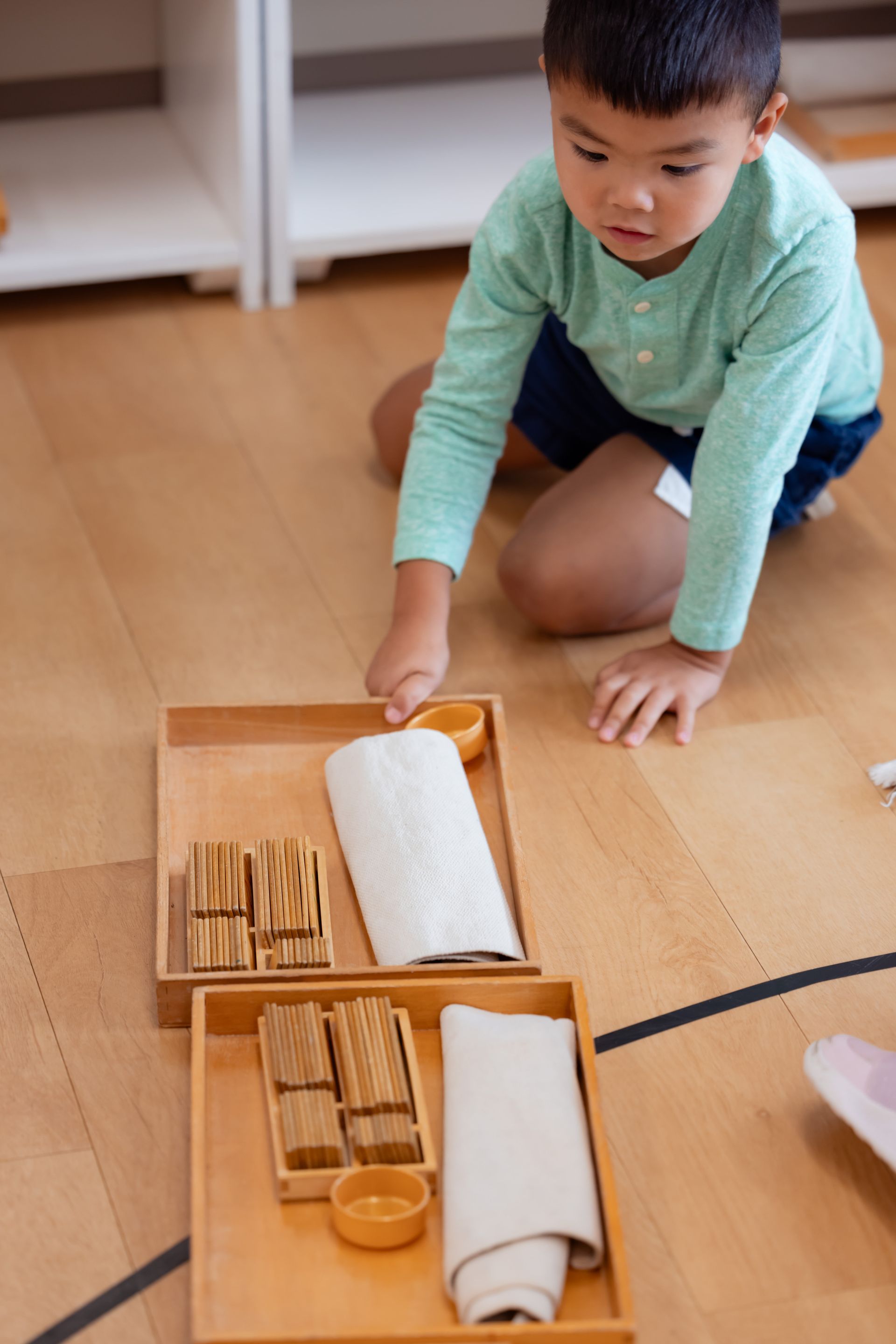
Whether we naturally embrace math or tend to shy away from it, human beings are hardwired to notice patterns, seek order, and make logical connections. Dr. Maria Montessori observed that young children have an innate inclination toward this kind of thinking—what she called the "mathematical mind."
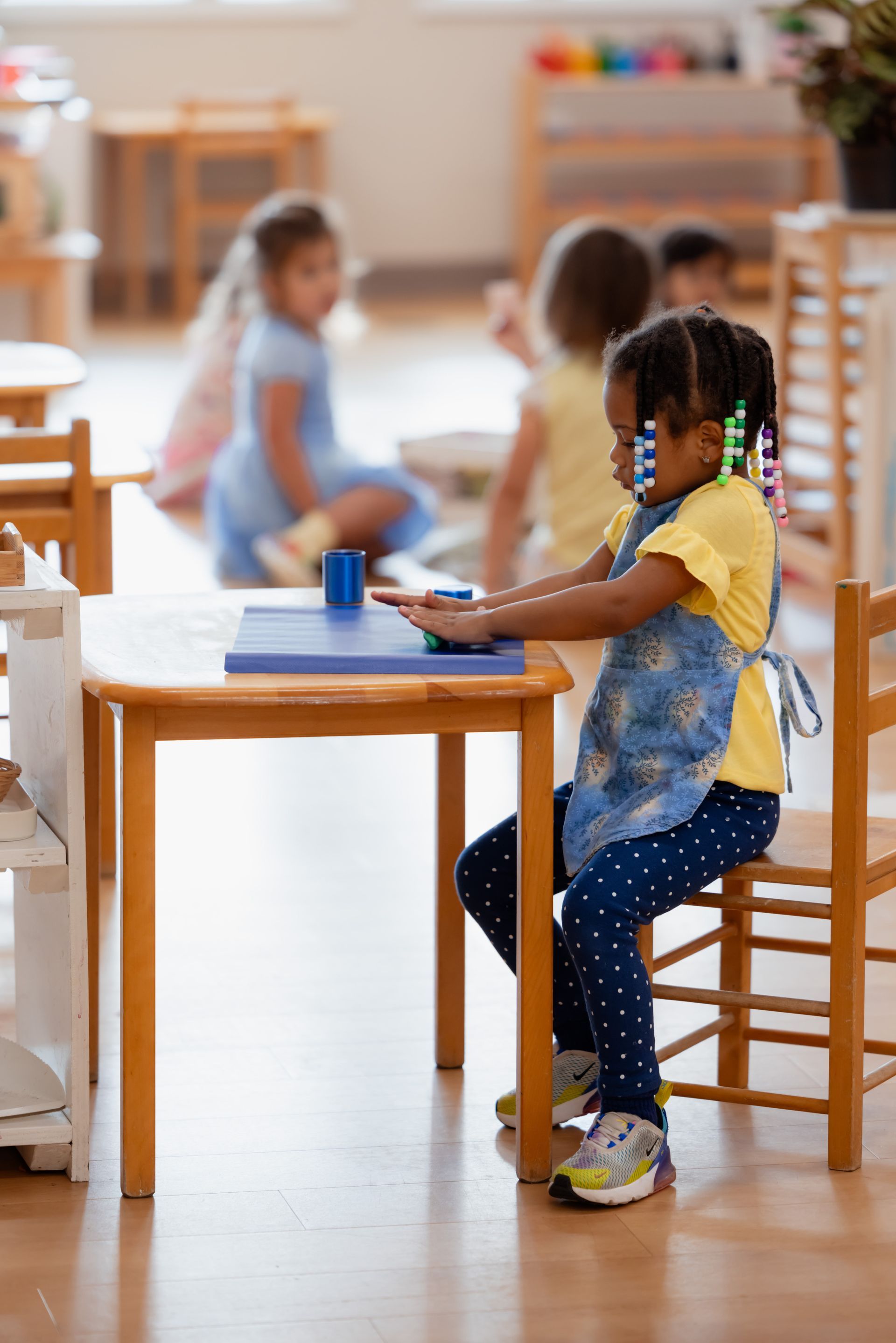
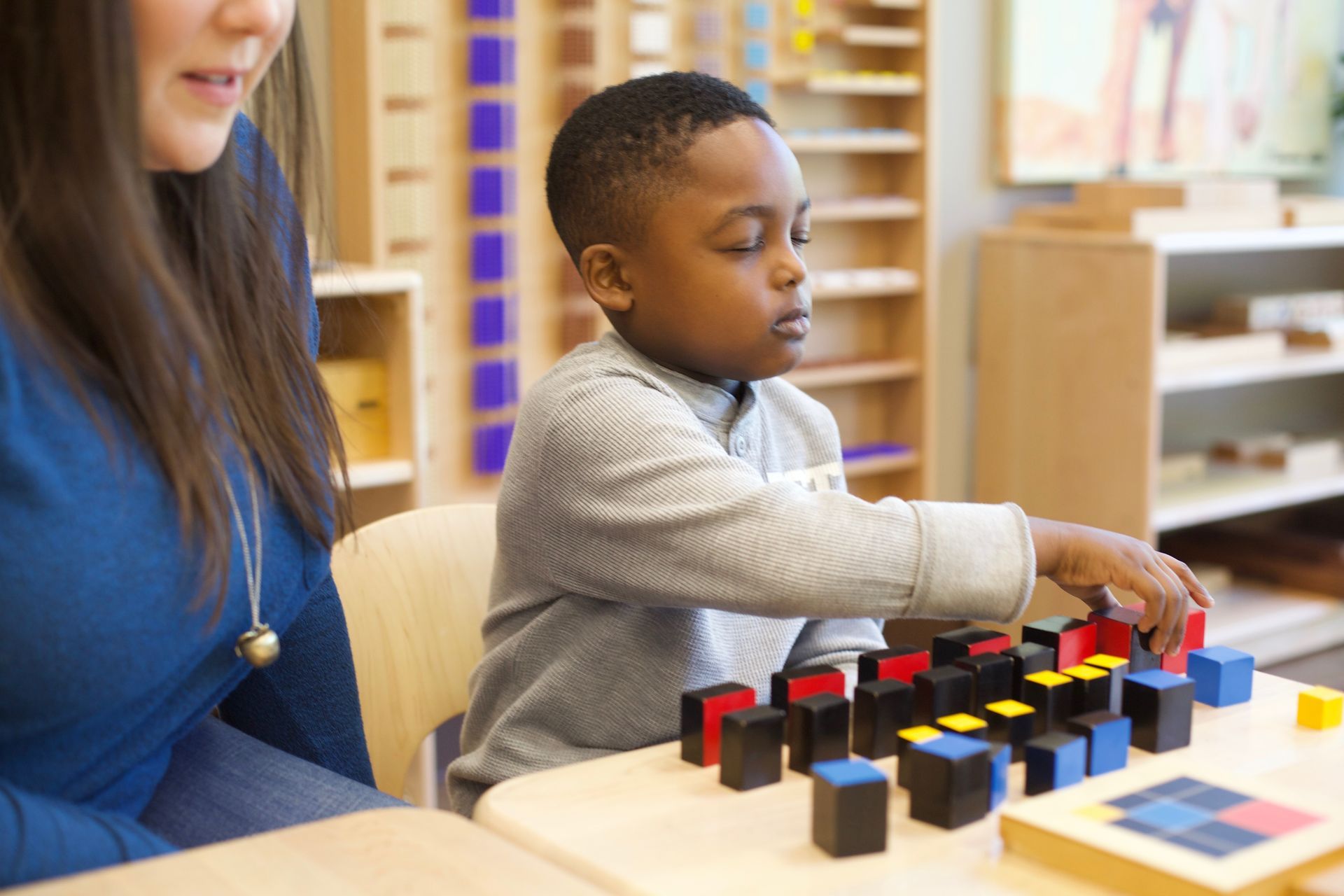
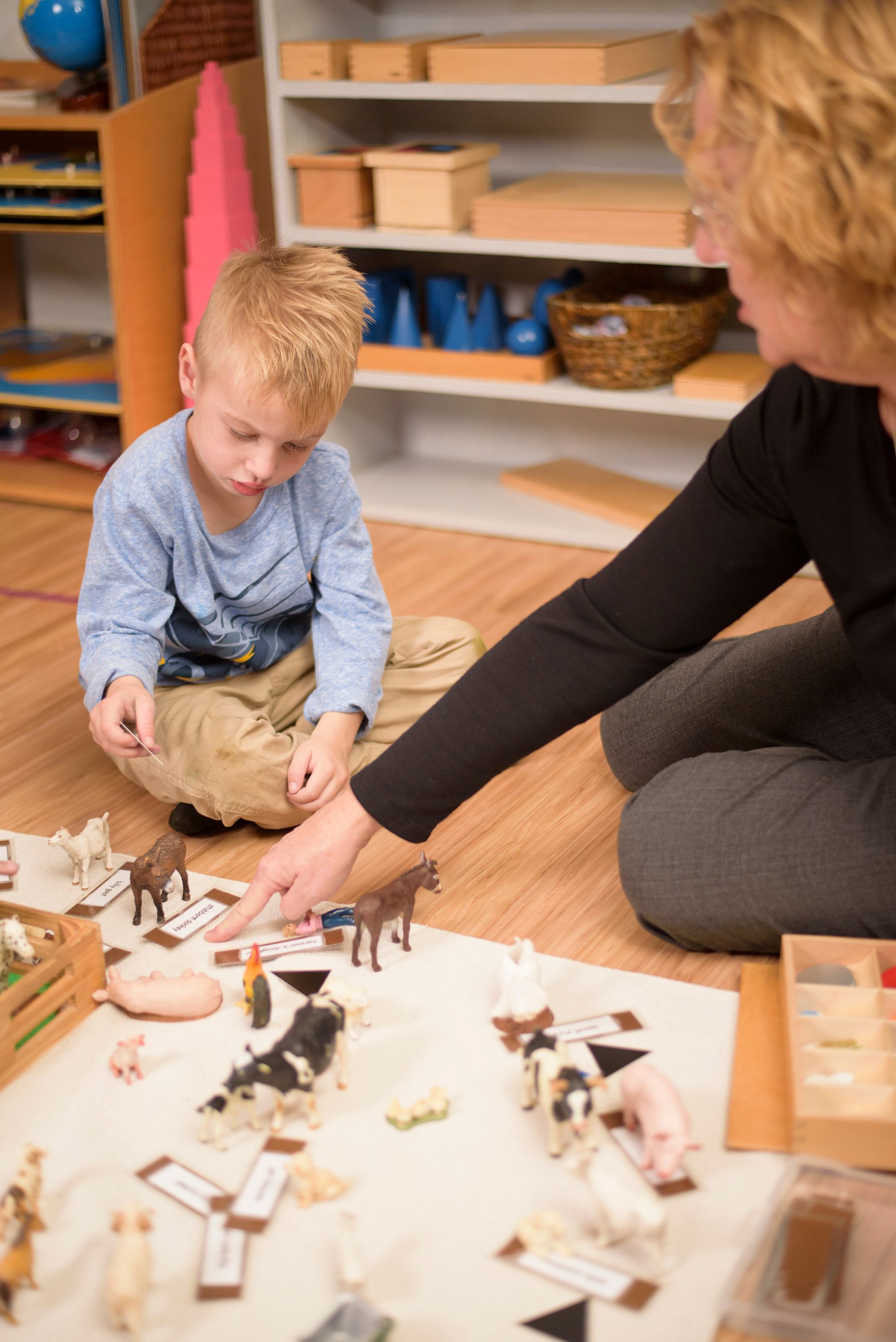
At The Montessori School of Englewood (TMSOE), we capitalize on this natural curiosity from the very beginning. Rather than relying on memorization worksheets or flashcards, our Primary (Head Start and Kindergarten) classrooms offer hands-on, sensorial learning experiences. By moving step-by-step from concrete materials to abstract concepts, children build a deep, joyful understanding of mathematics that lasts a lifetime.
Here is a look inside the six foundational stages of math learning in our Primary classrooms:
1. Numbers 1 to 10: Isolating Concepts and Building Sets
Learning numbers 1 through 10 involves integrating several distinct skills: sequence, quantity, symbol, and name. Montessori materials isolate each concept so a child’s understanding grows naturally through progressive, manageable steps.
- Number Rods: Color-coded with alternating red and blue sections, these rods allow young children to feel and see quantities as a single entity rather than just counting separate items.
- Sandpaper Numbers: Children trace tactile numerals with their fingers, linking the physical shape of a number symbol to their muscle memory and visual recognition.
- Connecting Symbol to Quantity: Materials like the Spindle Boxes and Cards and Counters guide children from understanding quantity as a fixed object to grasping how individual units make up a set.
Even at this early stage, children engage in physical, experiential activities that lay the groundwork for addition, subtraction, multiplication, and division—building intuitive impressions of these operations long before they learn formal math vocabulary.
2. The Decimal System: Hands-On Experience with Big Numbers
Once children master 1 through 10, they move on to one of the most exciting areas of the classroom: the Golden Beads. Because our decimal system relies on base ten, children are quickly introduced to units, tens, hundreds, and thousands.
Through the Golden Beads, a child literally holds a single unit bead in one hand and a thousand cube in the other—feeling the weight and volume difference between place values.
In our classrooms, the initial focus of the decimal system is process over product. We are not simply hunting for a right answer on paper; we want the child to understand what it truly means to combine quantities (addition), take them apart (subtraction), or scale them up (multiplication).
As children master these concepts with physical beads, they transition to semi-concrete tools like the Stamp Game and Dot Game, shifting smoothly toward symbolic math.
3. Continuation of Counting: Discovering Patterns up to 1,000
Building on their foundation, children learn the names, symbols, and quantities for numbers 11 through 100 using the Teen Boards and Tens Boards.
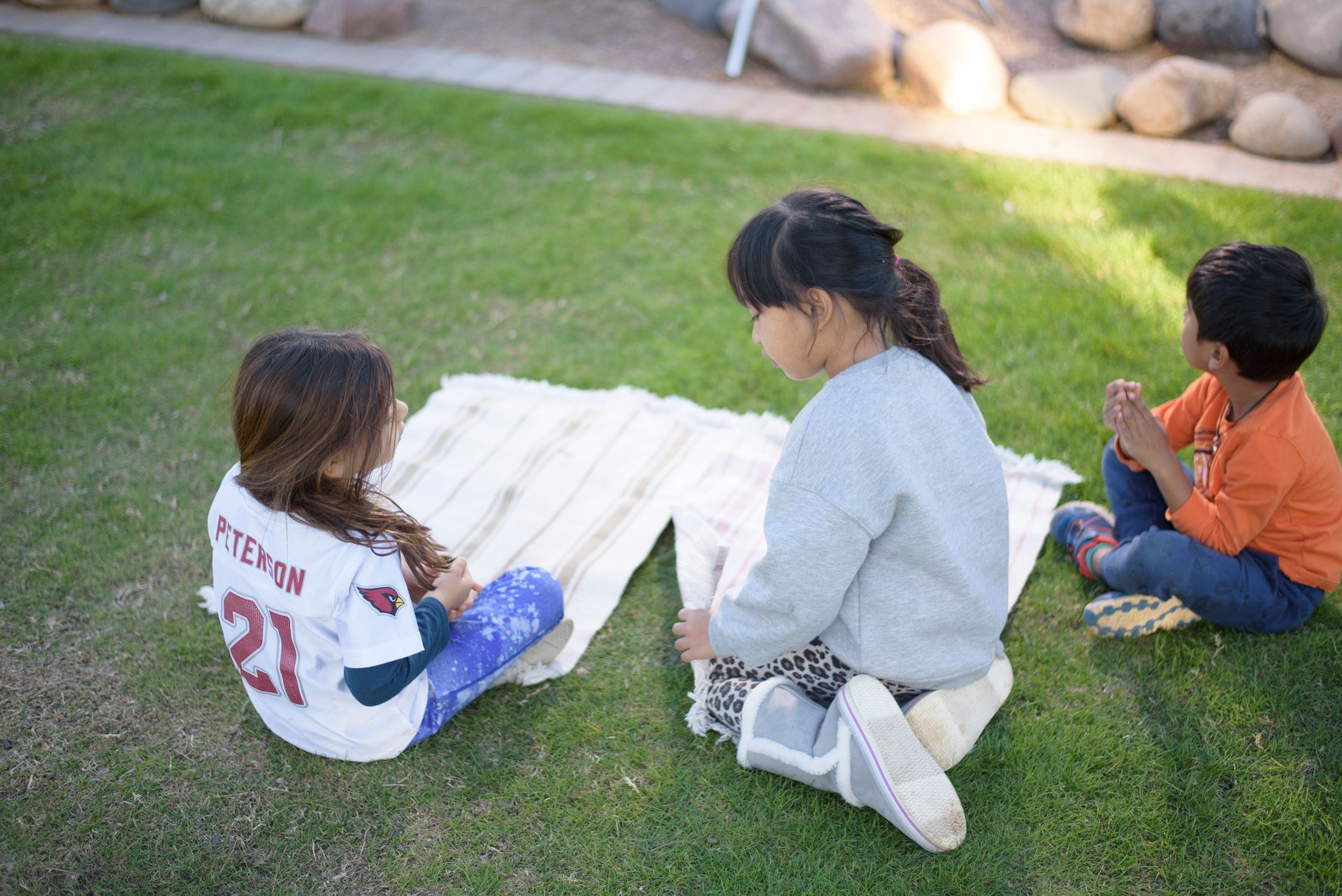
They also work with Bead Chains, unrolling long strands of beads across the rug to see the physical length of 100 or 1,000. Through these linear chains, children practice skip-counting (counting by 3s, 5s, or 10s), which lays a direct, visual foundation for future multiplication and geometry work.
While traditional rote counting has its place, we ensure our students move beyond simple recitation to form a true mental maturity and physical understanding of what large numbers represent.
4. Exploration and Memorization of Math Facts
Memorizing math facts at TMSOE is not about high-stress timed drills—it is about discovery, repetition, and confidence.
Using specialized hands-on materials like the Addition Snake Game, Subtraction Strip Board, Multiplication Bead Board, and Unit Division Board, children practice math facts over and over. This tactile exploration forms vivid visual memories of calculations (such as what 5 times 6 looks like in physical space) and builds strong neural pathways.
Through natural repetition, children reach a point where they realize mental math is faster than laying out physical materials. Once they feel that internal motivation, memorization follows naturally and joyfully.
5. Passage to Abstraction: From Concrete to Logical Thinking
As children prepare to transition into lower elementary, their developmental needs shift. They naturally want to be more efficient, moving from physical manipulation to mental and logical problem-solving.
During this stage:
- The Small Bead Frame helps them revisit addition and subtraction abstractly.
- The Wooden Hierarchy Material sensorially introduces quantities like ten thousand, one hundred thousand, and one million.
- The Racks and Tubes material introduces division with larger numbers.
Having worked with their hands for years, TMSOE students transition into abstract math with genuine understanding rather than anxiety.
6. Early Fractions: Exploring Parts of a Whole
The final progression in the Primary math sequence introduces fractions. Children begin exploring fraction cut-outs sensorially—discovering how halves, thirds, and fourths fit together to make a whole unit. They conduct basic operations and explore equivalent fractions through hands-on discovery, setting them up for smooth academic success in elementary school.
Deep Roots for Lifelong Confidence
By honoring how children naturally learn—moving from concrete objects to abstract thought, with endless opportunities for practice and choice—we help our students build resilience, spatial reasoning, and critical thinking skills.
At The Montessori School of Englewood, we believe every child in our community possesses a mathematical mind capable of incredible things.
Interested in seeing our classrooms in action?
We welcome families and community members to experience the TMSOE difference firsthand.
Click here to schedule a tour or
contact our team to learn more about enrollment.