Teaching What to Do: How Observation Helps Us Support Undeveloped Skills at Home and School
Do you see your child throwing their clothes on the floor in a heap? Leaving empty cups or papers scattered across the kitchen table? Interrupting while you are on a phone call or having a mealtime conversation?
In those moments, it is so tempting to jump in right away—correcting, scolding, or reminding them for what feels like the hundredth time.
In a Montessori framework, however, one of our most powerful tools is taking a step back to observe what is actually happening. By noting what we see without reacting in frustration, we can wait for an opportune, calm moment to teach what to do rather than focusing on what not to do.
Supporting Undeveloped Skills, Not Correcting "Bad" Behavior
Consider a common scenario from the classroom: A guide noticed that a child new to the environment was regularly cutting straight to the front of the line as students prepared to wash their hands. Other children were getting frustrated by these line-jumping tactics.
Instead of reprimanding the child in front of his peers, the guide paused and observed. She noticed that he wasn't acting with malicious intent; he simply had not yet learned the social grace of lining up in a community space.
At a quiet, neutral moment later in the morning, the guide connected with the boy privately. She gave him a clear, simple lesson: "When you see a line forming, we walk to the end of the line and wait for our turn." Relieved to understand the expectation, the child happily started walking to the back of the line from that day forward. He did not need a punishment—he just needed the information and skill!
Unless a child is actively hurting themselves, harming others, or damaging their environment, our primary job as adults is to observe and ask: What skill is my child missing right now to be successful?
The Power of Objective Observation
At the heart of the Montessori method is learning how to observe children in an objective, meaningful way. As adults, we practice learning how to look rather than merely react.
Observing without judgment or immediate assumptions requires patience and inner awareness. When we observe to understand—rather than assuming a child is being intentionally difficult—we honor their natural development. Our role as parents and educators is to prepare the environment and offer gentle guidance, allowing children to unfold into capable, self-directed individuals at their own pace.
Bringing This Approach Into Your Home
This shift in perspective works wonders at home, where daily routines can easily become points of friction:
- The Laundry Heap: If your child leaves clothes scattered across the floor, resist the urge to lecture in the moment. Take a breath, make a mental note, and circle back when everyone is relaxed. Later, invite them into a short, positive lesson: "I want to show you how our hamper works, or how we fold shirts to put in the drawer." Practice together once or twice, and thank them for working with you.
- Mealtime Interruptions: Instead of calling them out mid-conversation, pull them aside later and teach a grace and courtesy skill, such as gently placing a hand on your shoulder to signal they have something to say, then waiting for you to place your hand over theirs to acknowledge them.
- Kitchen & Household Chores: Walk through loading dishes into the dishwasher, wiping a table, or sweeping up crumbs as collaborative, side-by-side lessons rather than enforced chores.
Children naturally want to succeed and contribute to their household. More often than not, they simply need us to observe their needs, pause our immediate reaction, and show them the exact steps toward success.
Will they remember every single time after one lesson? Probably not. Learning requires patient repetition. Sometimes they will need a warm smile and a quiet gesture; other times they may need us to demonstrate the skill again weeks later. The key is maintaining a mindset of observation over reaction.
Partnering with The Montessori School of Englewood
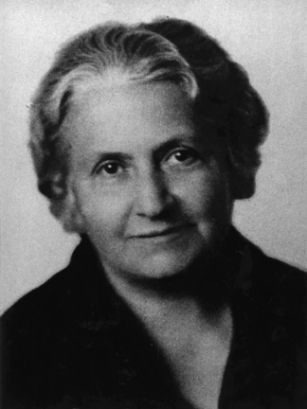
Dr. Maria Montessori discovered that a child’s character and competence are formed through meaningful experiences in their environment. By observing our children with care and intention, we give them the grace and tools they need to become confident, independent, and considerate members of our community.
We invite Chicago families, neighbors, and supporters to see this peaceful, observation-led approach in action across our Primary through Middle School classrooms.
Interested in exploring our tuition-free public charter school? Contact our team to learn more or schedule a campus tour.