Practical Life Has Purpose!
The Purposes of Practical Life in Montessori
In a Montessori classroom, practical life activities play a foundational role in supporting children’s development, independence, and connection to their environment. Because children are actively absorbing and adapting to the world around them, everything we offer in practical life serves a developmental need.
Supporting Independence
One of the primary goals of practical life is to nurture children’s functional independence—the ability to care for oneself and the environment and interact meaningfully within a community. The first plane of development (0 to 6 years) is marked by a strong drive for independence, with children eager to do things for themselves.
By the time a child enters the Children’s House (approximately ages 2.5 to 6), they have already made strides toward independence. However, they still require an environment that allows them to refine their skills. In the world, children generally encounter a number of obstacles to their independence:
- Household processes (e.g., cleaning dishes in the dishwasher) may be hidden or too complex.
- Tools are adult-sized and difficult for small hands to use.
- Movements happen too quickly for children to absorb (e.g., tying a shoe).
The Montessori environment addresses these barriers by providing:
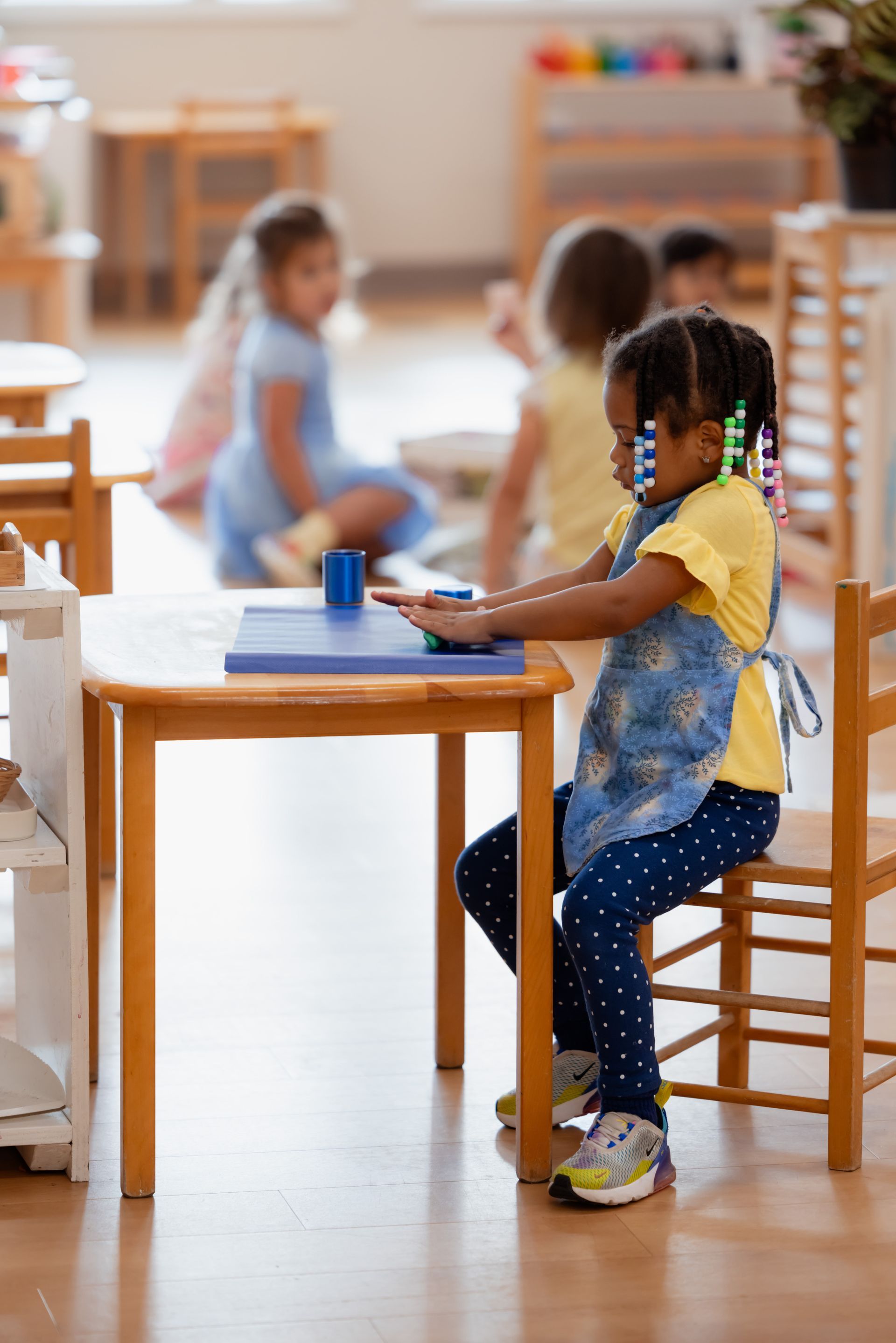
- Child-sized tools for daily activities, such as preparing food and caring for the classroom.
- A clear, ordered sequence of movements that children can observe and repeat.
- The freedom to practice skills at their own pace, allowing them to move from passive observers to active participants.
Supporting the Sensitive Period for Movement
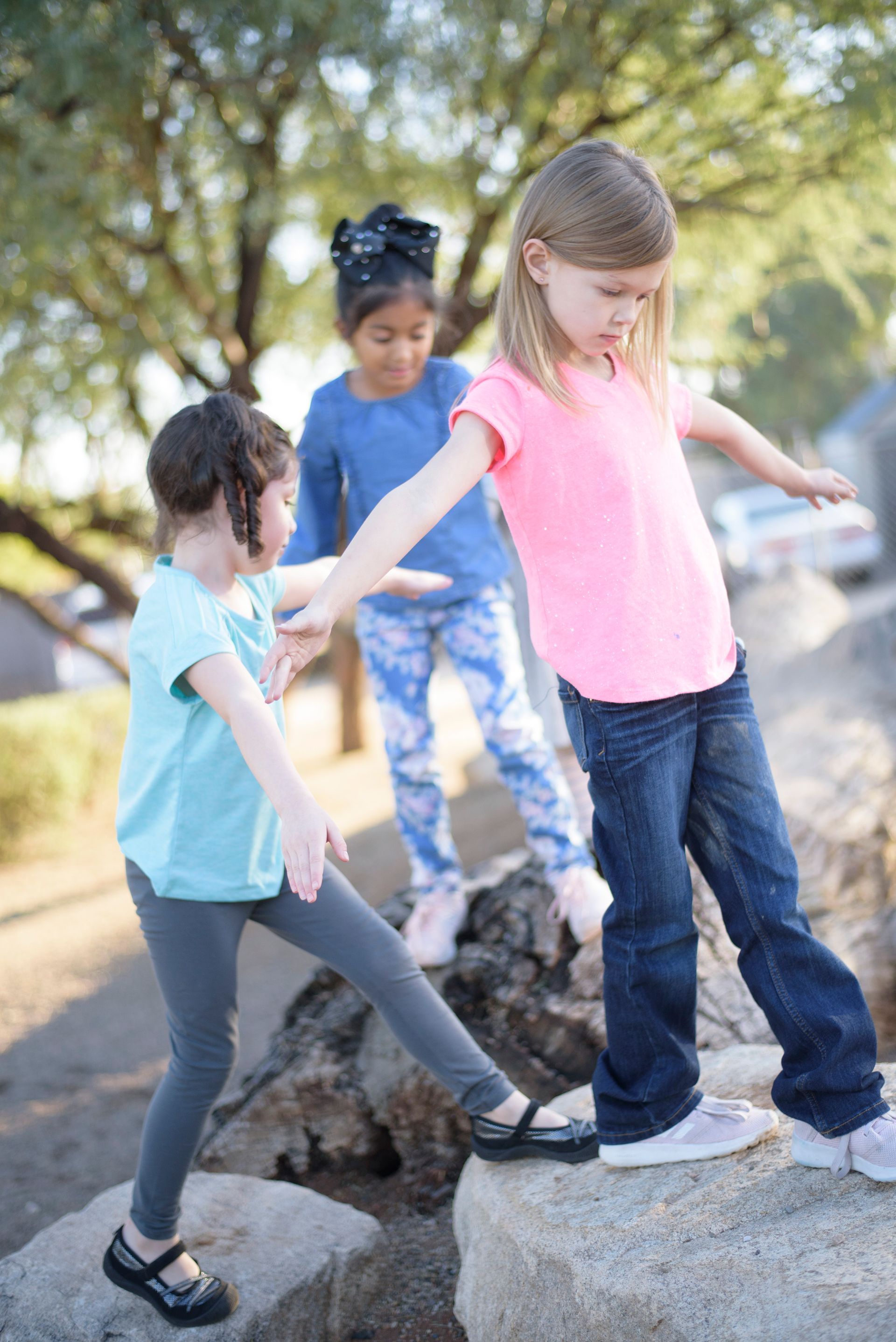
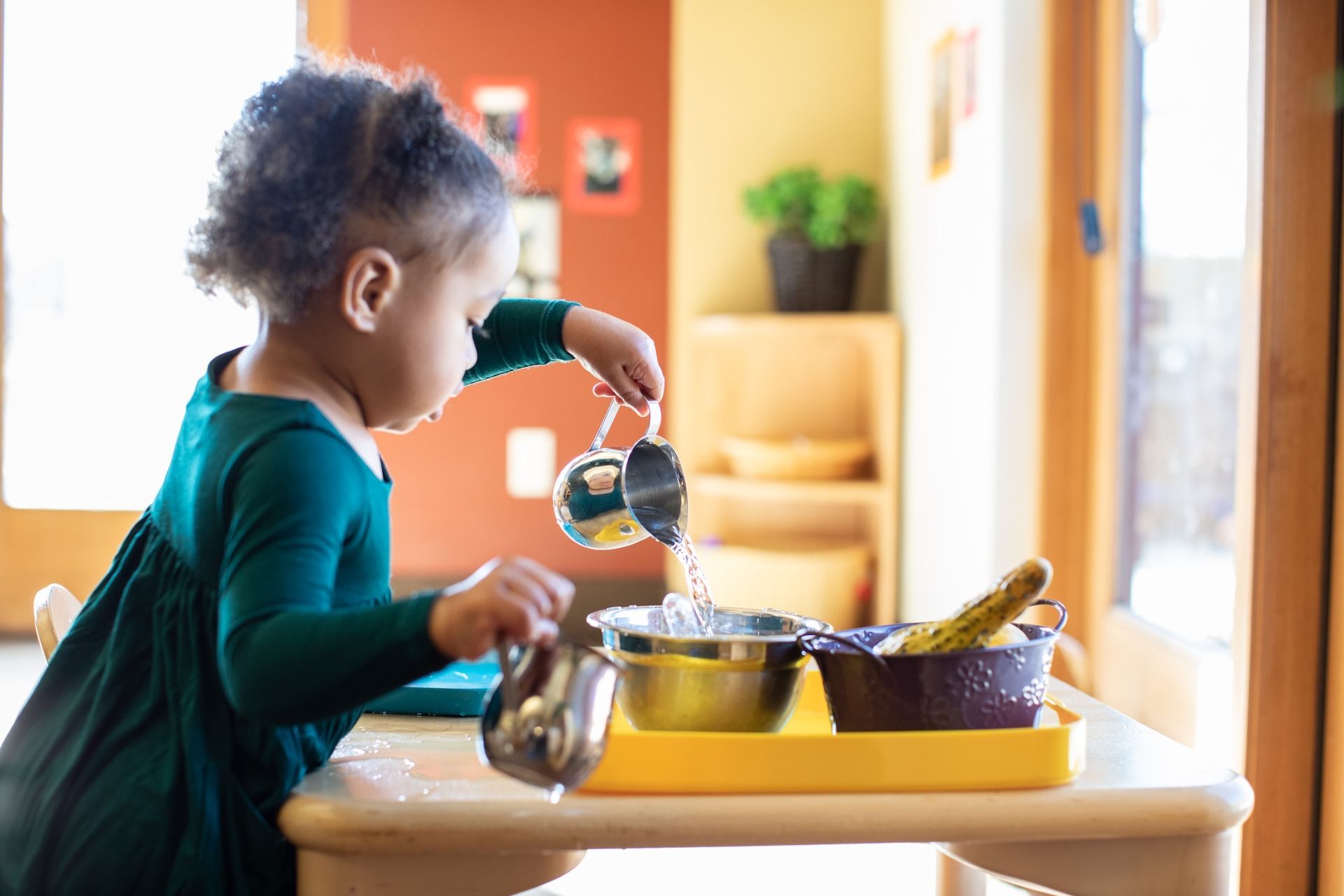
We also recognize that young children are in a critical period for refining their control and coordination. So practical life activities are designed to help children refine their movements in purposeful ways, directing children’s attention and energy toward focused, intentional actions. Walking on the line of an ellipse develops balance and control. Pouring water from a basin to a bucket refines precision. Carrying a tray teaches careful, measured movements.
One of the most challenging yet essential aspects of movement is control. It takes effort to stop pouring just before a cup overflows or use only a small drop of polish when shining an object. By engaging in these exercises, children strengthen their willpower and gradually master their own actions.
Supporting the Sensitive Period for Order
Children in the first plane of development have an innate need for external order, which is reflected in their surroundings and daily routines. Montessori environments support this in a variety of ways.
- We ensure that activities have a logical sequence of steps so as children learn new concepts, they can also rely on the sequencing.
- Materials are placed in a specific order on the shelves, moving left to right and top to bottom so children begin to internalize the same patterning we use for reading as they work through the easier and most concrete activities to the most challenging and abstract.
- Montessori activities are color-coded. For the youngest children this means that all of the items for something like window washing will have the same color which helps children keep the set together. As children get older the color-coding is designed to help them grasp concepts like place value in math or parts of speech in language.
Once children internalize these structures, they gain confidence and independence, allowing them to complete tasks from start to finish without adult intervention.
Assisting with Cultural Adaptation
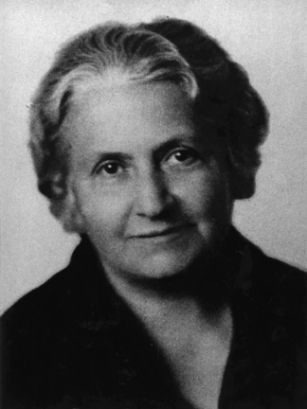
Practical life activities reflect real-world tasks that children observe in their daily lives. Children are naturally drawn to meaningful work—they want to help, imitate, and participate. For example, in Dr. Montessori’s early observations in San Lorenzo, she saw that children were fascinated by the gardener and the custodian, eagerly following and watching their work. Children see adults doing marvelous activities, and children want to learn the skills to participate! Through practical life activities, children engage in culturally relevant tasks that allow them to feel like valuable members of their community.
Supporting Orientation
Orientation is a fundamental human tendency—we all seek to understand our surroundings and how to function within them. Practical life exercises help children orient to the Montessori classroom by introducing essential routines. For example, we take the time to teach children things that might otherwise be taken for granted, such as:
- How to carry a chair properly.
- How to greet a friend.
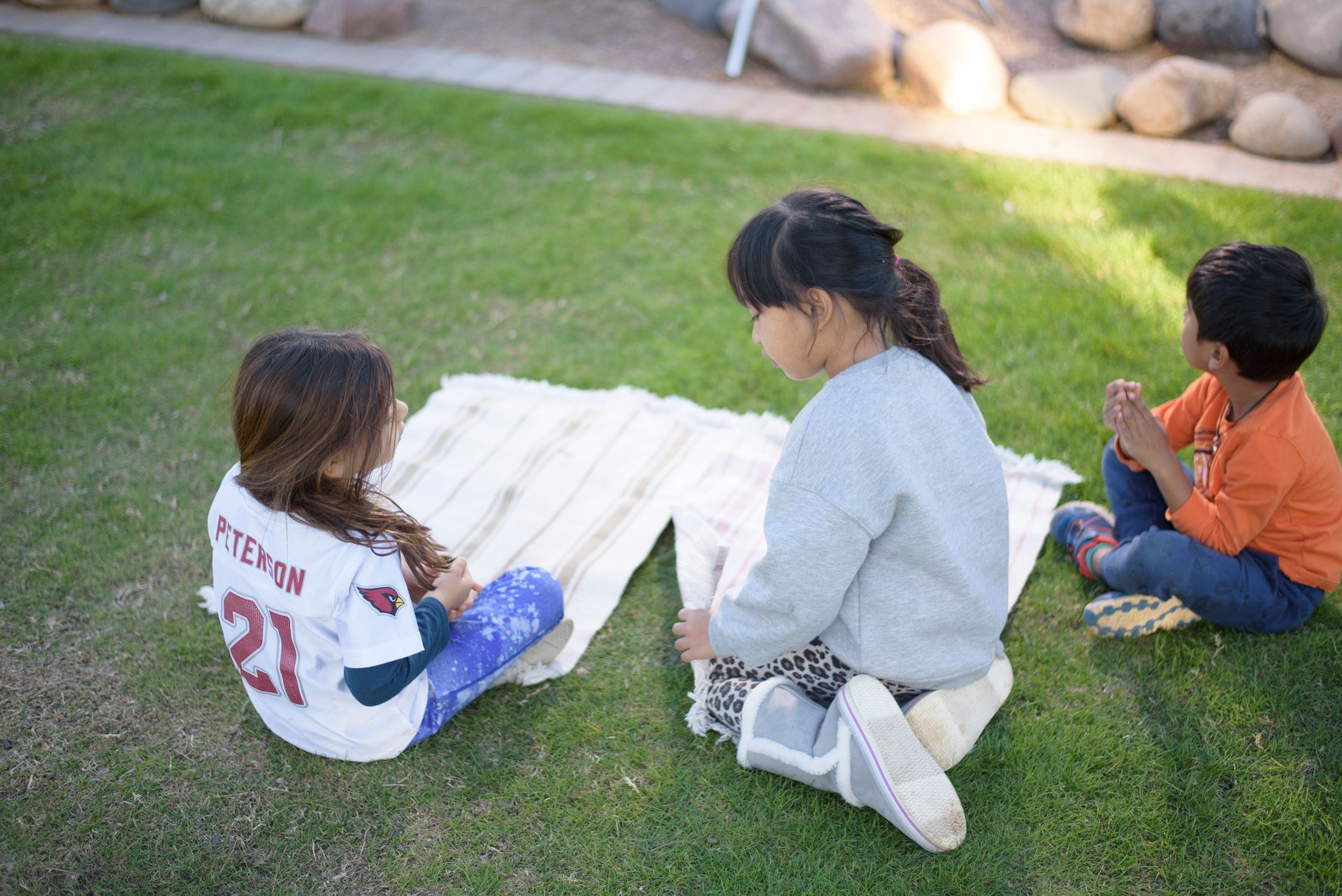
- How to roll and unroll a work rug.
- How to ask for help.
By taking time to demonstrate these tasks, we show respect for the child and provide the knowledge they need to act confidently in their space.
Supporting the Development of Concentration
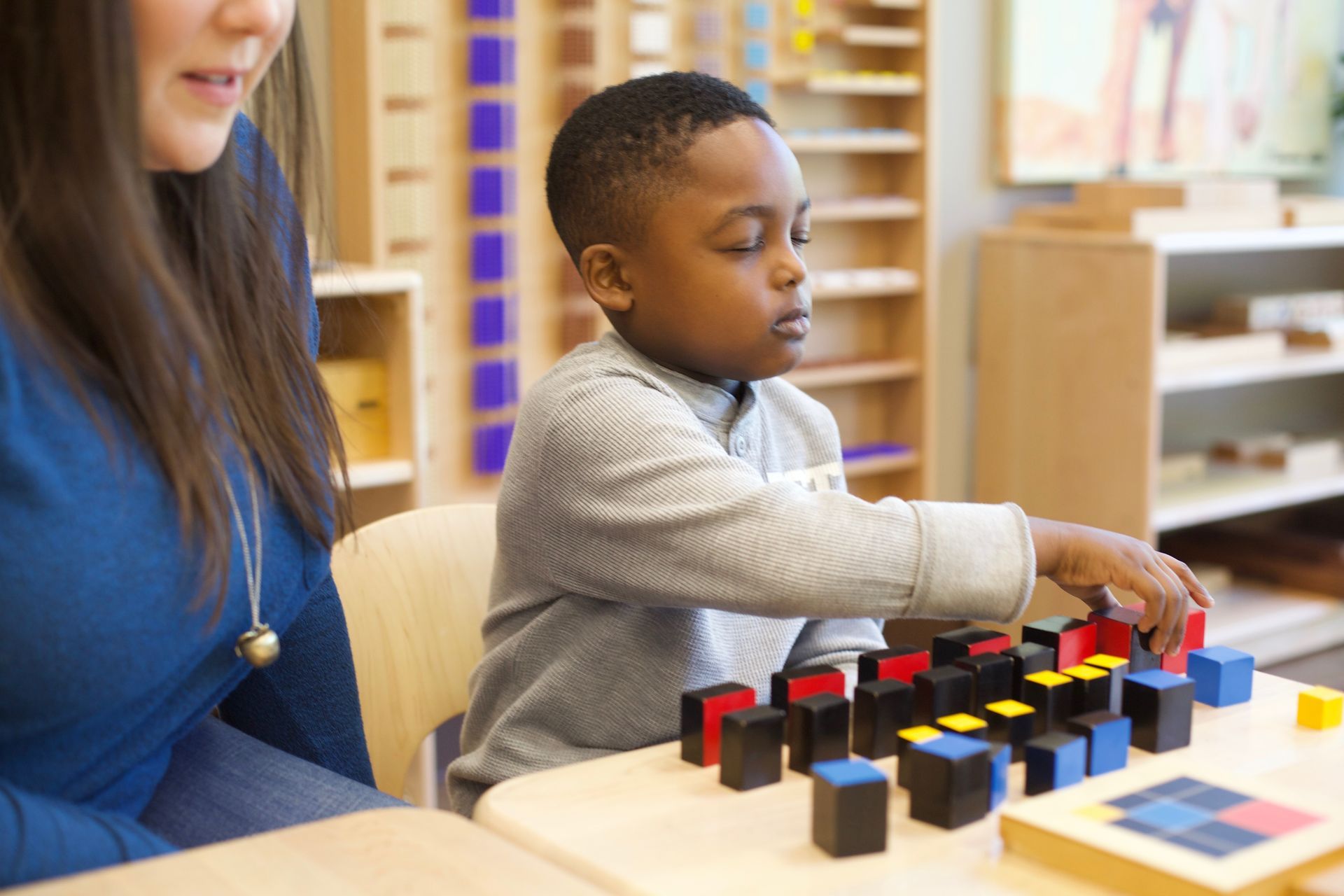
Practical life activities serve as a gateway to deep concentration. The freedom to choose and repeat exercises allows children to follow their intrinsic motivation and work toward self-perfection.
When children reach deep concentration, they experience:
- Joy and a sense of fulfillment.
- An increased connection to others.
- A natural reduction in undesirable behaviors.
The ability to repeat an activity for as long as needed also supports children’s sensitive period for order and mastery. This is why practical life often serves as the first point of engagement for children in the Montessori classroom.
Supporting the Development of the Will
Practical life exercises help children develop willpower and self-control by bridging the gap between impulse and deliberate action.
At first, children act on instinct, but through repeated exercises, they learn to:
- Act consciously and voluntarily.
- Perfect their actions through self-correction.
- Develop grace, courtesy, and social awareness.
Whether through learning how to clean up a spill or preparing snack to share with others, children learn to control their impulses and consider the needs of others.
Dr. Montessori beautifully summarized this transformation in The Discovery of the Child:
“The grace and dignity of their behavior and the ease of their movements are the corollaries to what they have gained through their own patient and laborious efforts. In a word, they are ‘self-controlled,’ and to the extent that they are thus controlled, they are free from the control of others.”
Practical life is far more than just pouring, scrubbing, and folding—it is the foundation for independence, concentration, order, and social development. These carefully designed activities help children orient to their world, refine their movements, and develop the willpower to act with purpose.
By embracing practical life, we give children the tools to engage meaningfully with their environment, take ownership of their learning, and ultimately, become confident, self-sufficient individuals. Contact us to schedule a tour so you can see how young children use practical life activities in powerful ways!