More Than a Chart on the Wall: How Montessori Timelines Build History, Imagination, and Character

Time is one of the most abstract concepts for a young child to understand. Yesterday, tomorrow, next week, last month. These words float through daily conversation long before a child has any concrete sense of what they actually mean. For young children, the passage of time isn't yet something they can feel or visualize. So how do we build an understanding of time?
This is where Montessori timelines come in, and they do far more than most people realize.
Making Time Tangible
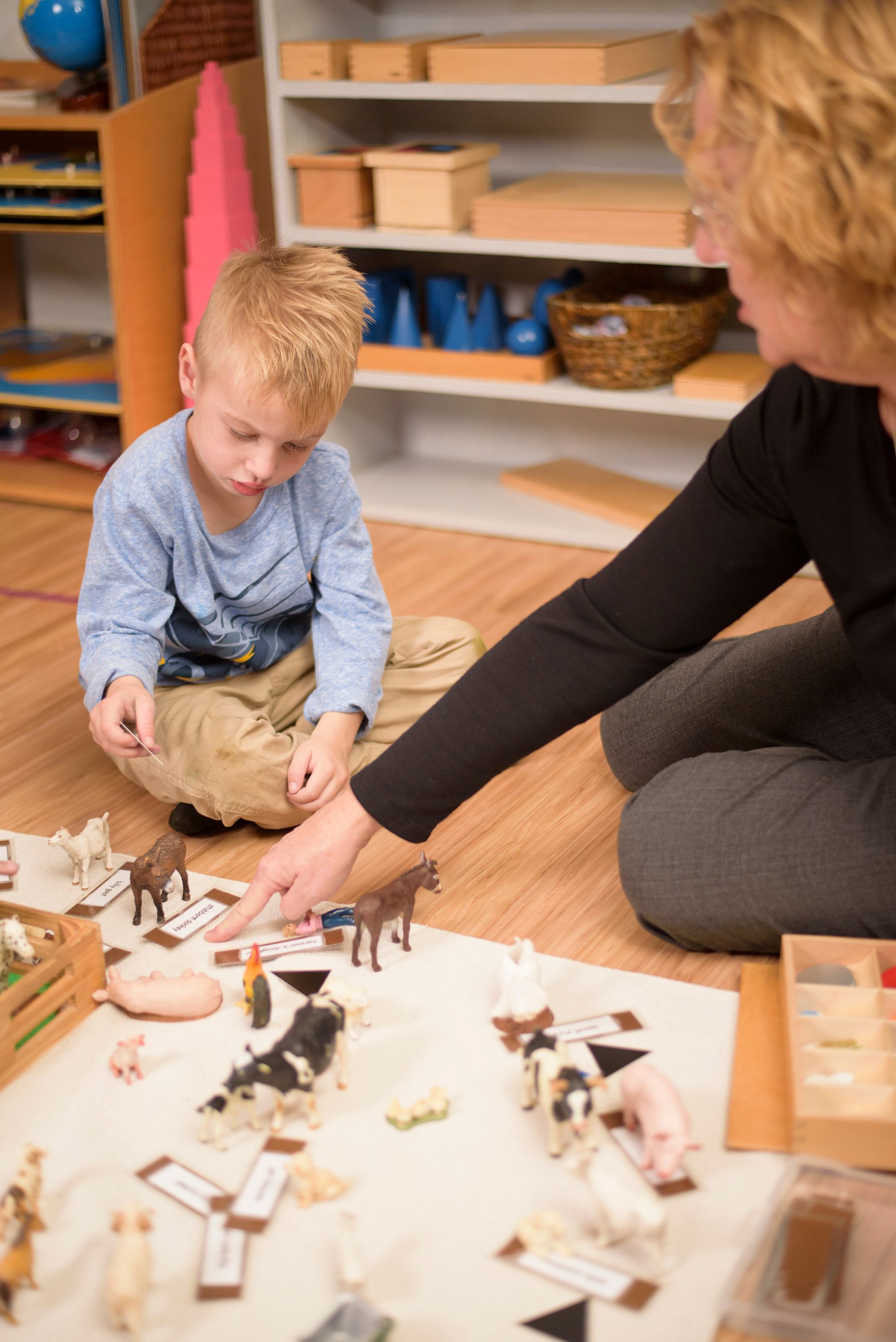
In a Montessori classroom, timelines aren't decorations on the wall. Children actually use the timelines. They handle timelines, construct the pieces, arrange items in sequence, and ultimately connect the vocabulary they've been hearing to something they can see and touch. Children who work with timelines begin to understand that Monday comes before Tuesday, and how days accumulate into weeks, weeks into months, and months into years. The concept of time becomes something children can hold in their hands, rather than simply a word a grown-up uses.
Dr. Maria Montessori was clear about why this matters for young children. In The Absorbent Mind, she wrote that children at this age are "urged by the laws of their nature to find active experiences in the world about them" and that they take in knowledge through activity involving movement. The timeline is a perfect expression of this principle. Children don't passively receive information about history or time. They construct their understanding of it actively through their hands.
A Gateway Into History
As children grow more confident with the concept of time, timelines become a natural bridge into history itself and the kind of thinking history requires. How did human societies change over the centuries? How did life on Earth evolve over vast stretches of time? These are enormous, abstract questions, and yet Montessori children approach them with genuine curiosity and engagement, precisely because they've already been laying the groundwork through hands-on work with time.
The timeline gives children a structure for imagining what they cannot directly see or experience. This support is significant. The ability to mentally reach beyond the present moment and picture the past or the future is one of the most distinctly human capacities we have. Montessori timelines help children develop and strengthen exactly this capacity, at precisely the age when it is beginning to emerge.
The Balance Between Imagination and Reality
Dr. Montessori wrote about the relationship between imagination and abstraction, and considered them as two powers of the mind that "go beyond the simple perception of things actually present." Both are essential. And crucially, both need to be developed together, grounded in each other, rather than in isolation.
This balance of abstraction and structure is one of the gifts of the Montessori timeline. When a child works with a timeline, their imagination is anchored in sequence, in order, in fact. The structure of time provides the foundation from which their imagination can safely and richly expand. As Dr. Montessori put it, "the effort to cultivate imagination alone must lead to a lack of balance which becomes an obstacle to success in the practical things of life."
In other words, wonder needs a scaffold. And the timeline provides one.
Building Character Through Order
As children are learning to place events in sequence, they are creating mental order that provides a sense of stability and confidence in understanding cause and effect across time.
Dr. Montessori described this internal ordering as foundational to the development of personality itself. The experiences children have (and the work they do with their hands and minds) shape who they are becoming. This goes beyond just information. It’s about building the self!
What This Looks Like in Practice
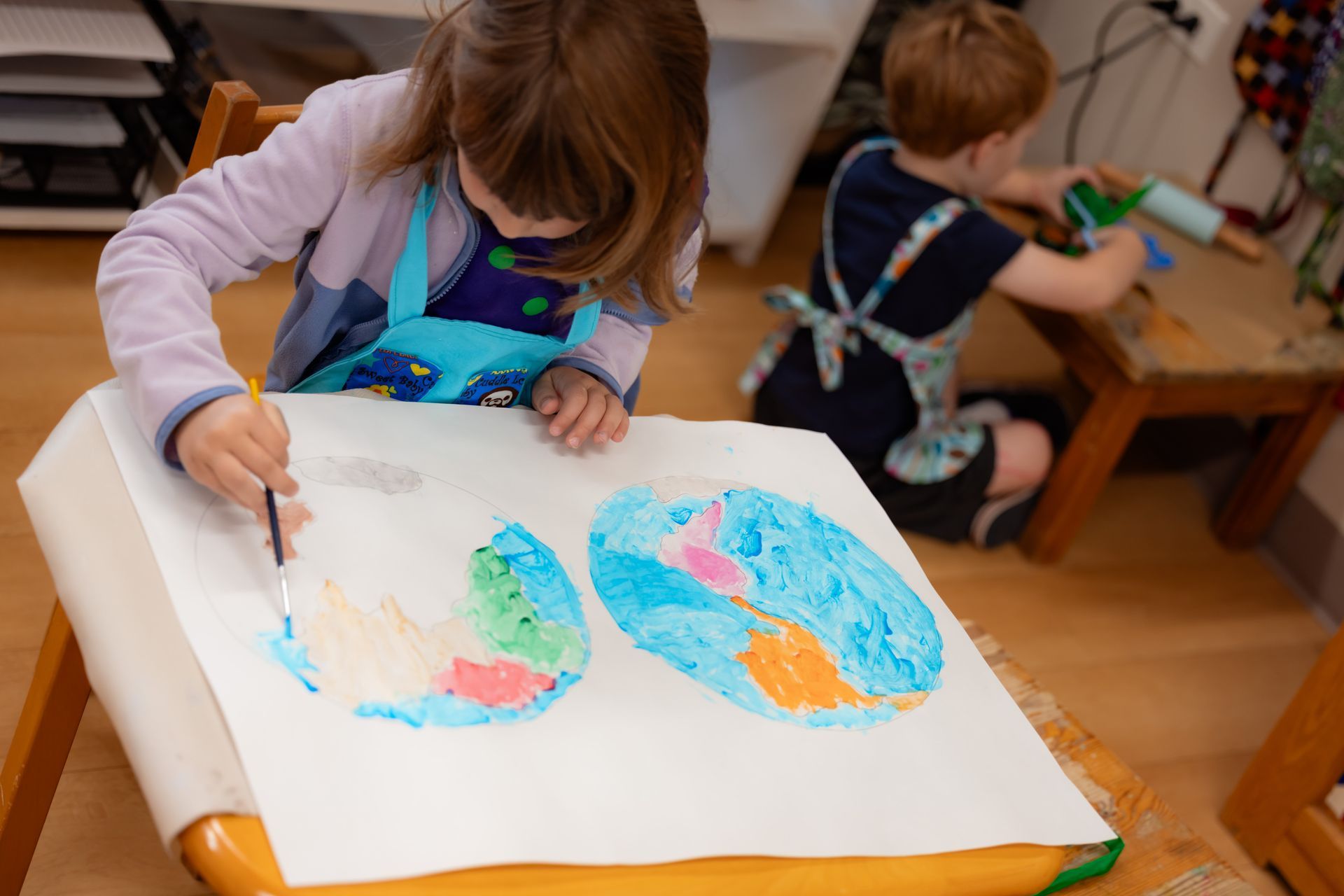
In a Montessori classroom, a child might work with a simple personal timeline first to understand their own life in sequence, which can be tailored to different ages or learning styles. From there, they might explore timelines for the days of the week, the months of the year, or the stages of a butterfly's life. As they progress, the timelines expand dramatically to encompass the history of human civilization, the development of written language, and even the story of life on Earth itself, accommodating diverse developmental needs.
Each experience builds on the last, deepening both historical understanding and children's capacity for abstract, imaginative thought. The timeline, although an excellent teaching tool, is so much more. It is a way of helping children understand their place in the great sweep of time, and in doing so, they are better able to understand themselves.
We'd love to show you how timelines and other Montessori materials work in our classroom. Schedule a visit here in West Englewood, Chicago, to see the work in action.