Backed by Science: Why Montessori for Middle School Really Works
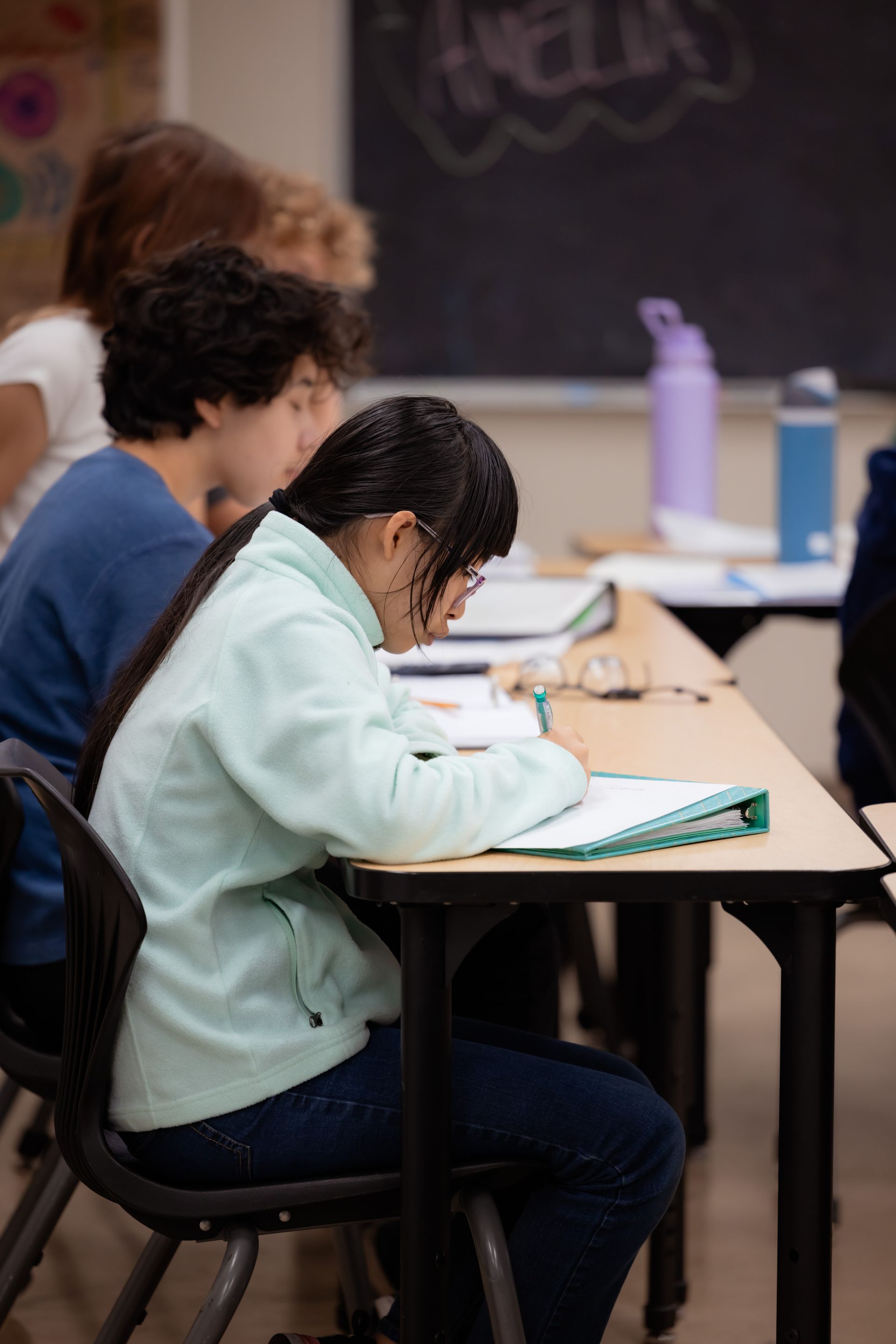
Middle school is often seen as a challenging, transitional period for young people. However, interest in Montessori middle school programs is growing rapidly—and for good reason! Adolescents thrive in educational settings that honor their developing independence, foster real connection, and connect academic learning to real life.
The best news? Montessori adolescent programs aren't just a great idea in theory—they are backed by peer-reviewed educational research.
At The Montessori School of Englewood (TMSOE), our middle school program (ages 12–14) is designed specifically around the social, emotional, and cognitive needs of adolescents in West Englewood. Here is a look at what the research says about why the Montessori approach works so effectively for middle schoolers.
1. Montessori Builds Autonomy, Self-Confidence, and Strong Teacher Support
A landmark study examining seventh-grade students measured how specific learning environments impact an adolescent’s sense of self-determination—the combination of autonomy, competence, and connection to others.
Researchers tracked students as they transitioned into a Montessori adolescent environment. Through detailed surveys and narrative interviews, several clear themes emerged:
- Choice and Ownership: Students reported having real agency over how they approached their work, including choosing the types of tasks and organizing their daily schedules.
- Growing Confidence: While many students initially felt nervous about managing their workload, by late autumn, virtually all participants reported feeling confident in their ability to succeed.
- Strong Social-Emotional Support: Students overwhelmingly emphasized the role of supportive teachers who cared for them as individuals and helped them stay accountable, alongside community meetings that built trust among peers.
The Research Takeaway: When middle schoolers are given clear structure paired with meaningful choice, they develop the organizational skills and self-belief needed to navigate high school and beyond.
2. STEM is Integrated, Hands-On, and Connected to Real Life
In conventional education, STEM (science, technology, engineering, and mathematics) is often taught in isolated subjects with textbook examples. Research shows that Montessori adolescent programs naturally fulfill the true goal of STEM by making it interdisciplinary and rooted in real-world application.
A national study of Montessori adolescent educators found that authentic STEM learning happens organically through practical, hands-on work. While traditional Montessori adolescent models utilize rural farm settings (Erdkinder), the study highlighted that urban Montessori programs successfully adapt these principles to fit their specific environments.
Key elements of Montessori middle school STEM include:
- Authentic & Contextualized Work: Applying math and science to solve tangible problems—such as designing urban gardens, managing student micro-enterprises, or measuring community environmental data.
- Communities of Practice: Working in small teams alongside adult guides to manage real projects.
- Sociopolitical & Community Connections: Linking scientific inquiry directly to local issues, environmental justice, and community needs.
The Research Takeaway: When STEM is connected to real community challenges rather than isolated worksheets, students develop critical thinking and practical problem-solving skills that last a lifetime.
3. Montessori Students Report Higher Intrinsic Motivation and Engagement
A comparative study surveying 290 middle school students across Montessori and traditional school settings evaluated student motivation, energy levels, and emotional well-being.
The findings showed that Montessori middle school students demonstrated significantly higher levels of:
- Intrinsic Motivation: Learning because they are genuinely interested, not just for a grade or external reward.
- Energy and Positive Affect: Feeling active, engaged, and emotionally supported during the school day.
- "Flow" and Deep Focus: The ability to sustain undivided attention on meaningful tasks.
Unlike traditional middle schools that rely on rigid block schedules, heavy lecture formats, and constant testing pressure, Montessori environments offer extended work periods, collaborative projects, and student-led decision-making.
The Research Takeaway: By respecting an adolescent’s natural drive to collaborate with peers and exercise independence, Montessori fosters a deep, lasting love for learning during a crucial stage of development.
Experience Public Montessori at TMSOE
At The Montessori School of Englewood, we are proud to offer a tuition-free, high-quality public Montessori Middle School program serving students ages 12 through 14. We combine academic rigor with restorative practices, community leadership, and hands-on learning—preparing our students to step confidently into high school as self-directed agents of change.
Want to see how our middle school classrooms operate in real life?
Schedule a tour to learn more about Montessori.