A Guide to the Montessori Lexicon: Elementary & Middle School at TMSOE
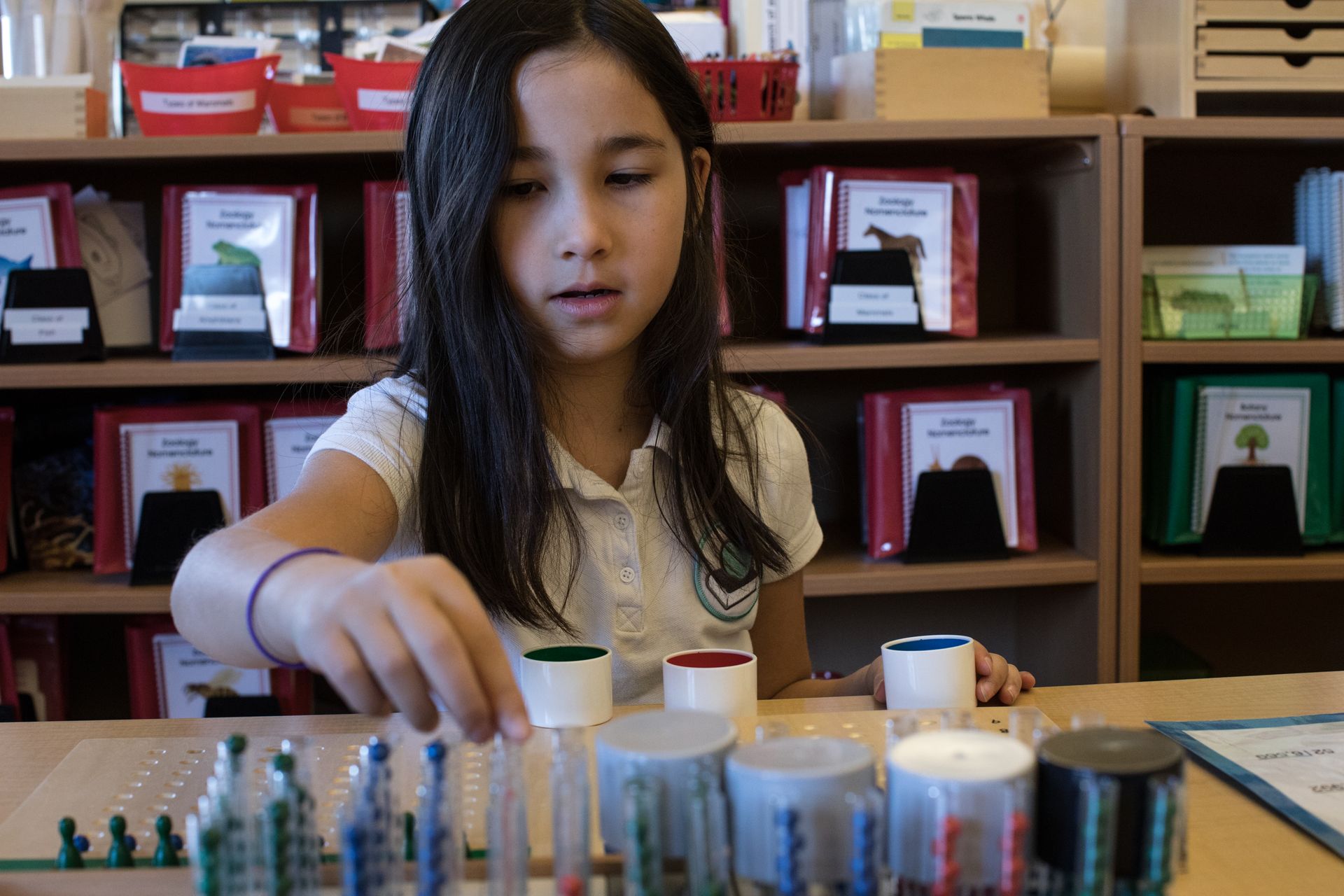
As is often the case with specialized educational approaches, Montessori has its own unique terminology. At The Montessori School of Englewood (TMSOE), we believe in partnering closely with our families. Understanding these core concepts helps us work together to support your child’s growth from the inside out.
In this edition of our Montessori Dictionary, we are focusing on key terms that define the Elementary (ages 6–12) and Middle School (ages 12–14) years. Grounded in the vision of Dr. Maria Montessori, these concepts shape how we cultivate young agents of change right here in West Englewood.
Cosmic Education (Elementary: Ages 6–12)
"Since it has been seen to be necessary to give so much to the child, let us give him a vision of the whole universe."
— Dr. Maria Montessori, To Educate the Human Potential
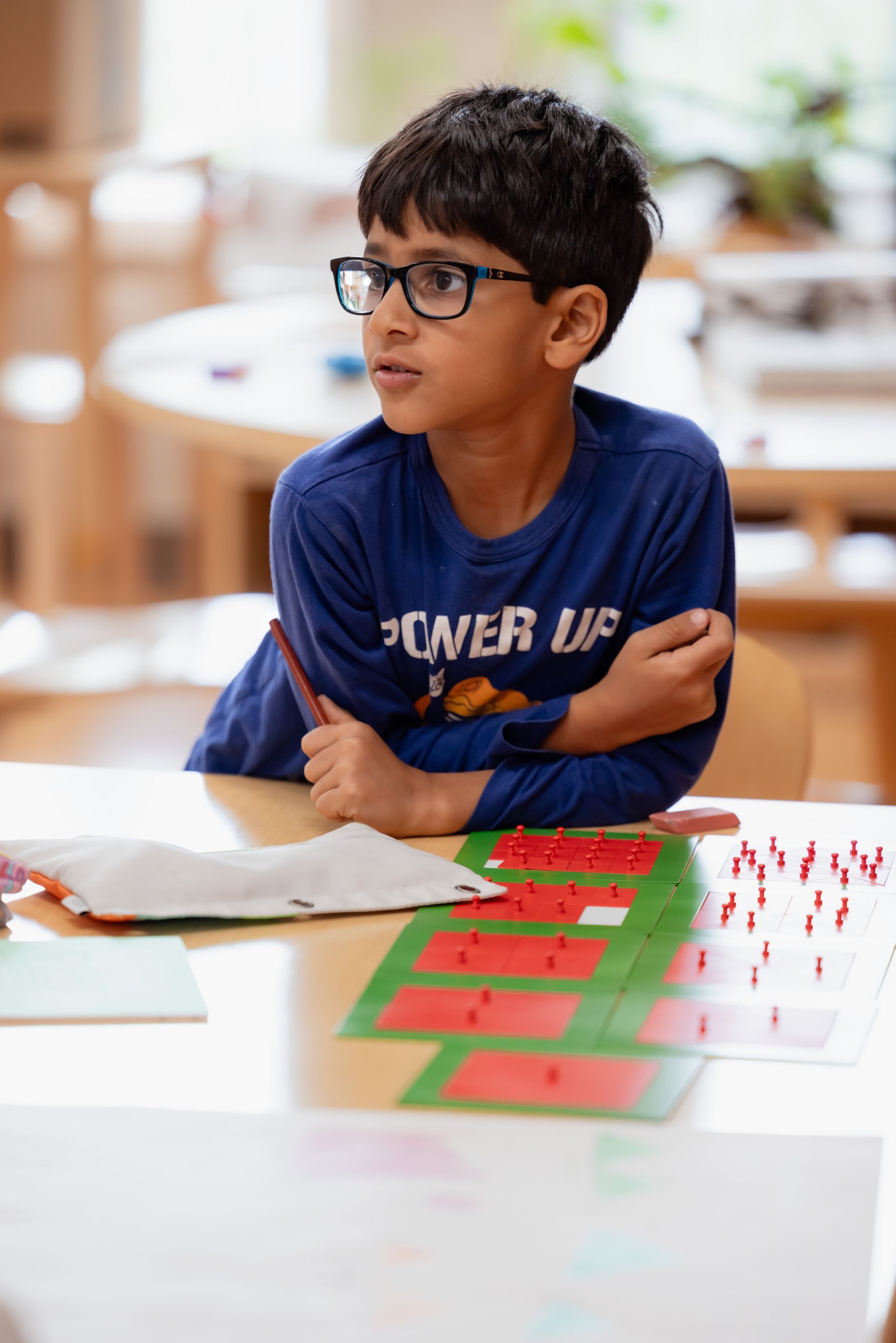
Dr. Montessori developed Cosmic Education as the cornerstone of the elementary experience. Designed specifically for the developmental needs of children ages 6 to 12, this approach presents the universe as an interconnected whole governed by natural harmony.
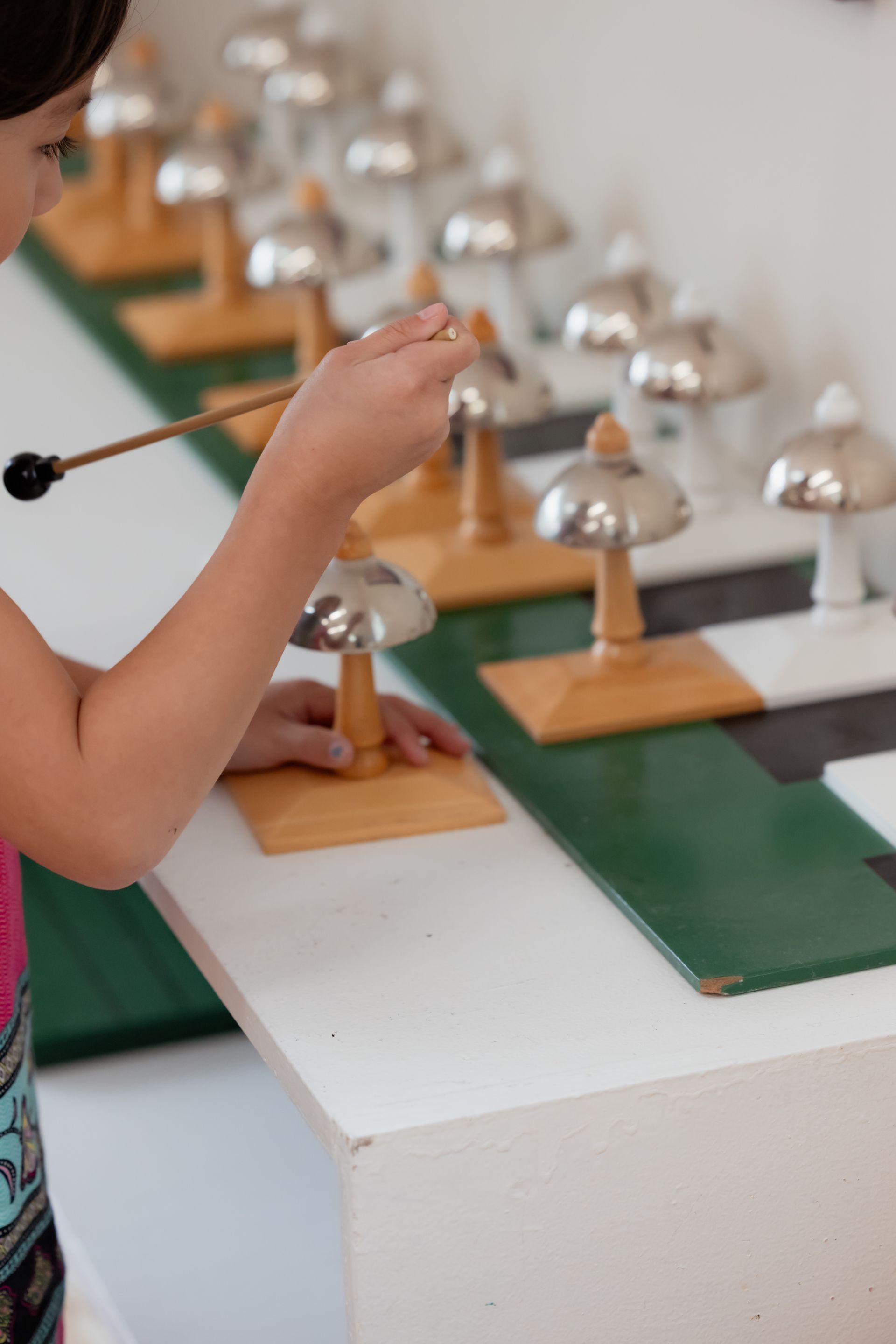
Rather than teaching subjects in isolated silos, Cosmic Education shows children how history, science, language, art, and math are deeply linked. It highlights the truth that everything we learn builds upon the great work of those who came before us in human history.
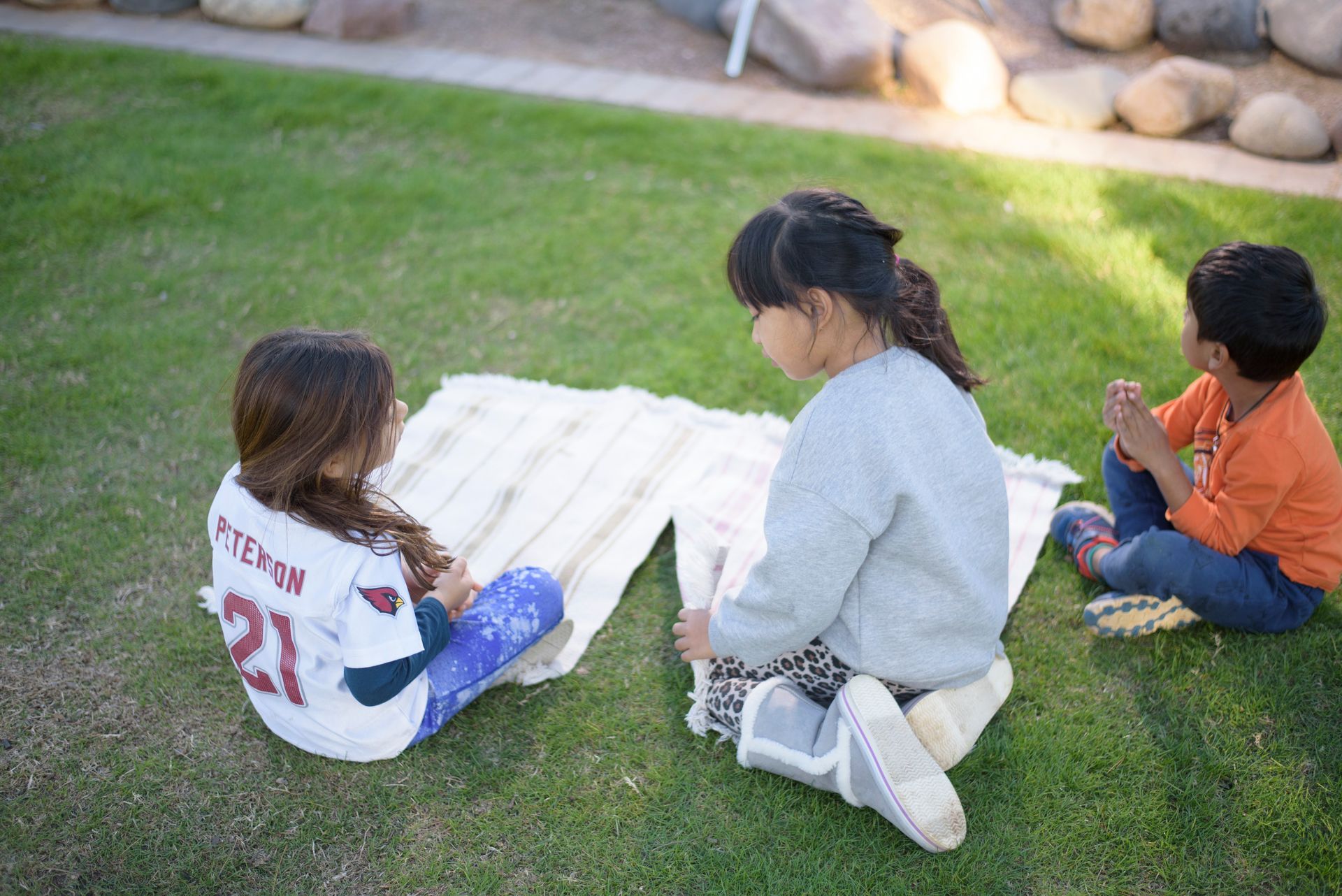
At TMSOE, Cosmic Education connects our students to their broader world and local community. It instills a sense of purpose, helping students see that they are active participants in an interconnected world with the power to contribute meaningfully to it.
Erdkinder: Education for the Adolescent (Middle School: Ages 12–14)
"They are learning about civilization through its origin in agriculture. They are the 'land children'."
— Dr. Maria Montessori, From Childhood to Adolescence
Dr. Montessori used the German term Erdkinder (meaning "land children") to describe her vision for adolescent education. She recognized that adolescents (ages 12–14) need a balance of rigorous intellectual study and meaningful, real-world physical work to build true social and economic independence.
While Dr. Montessori originally envisioned residential farm settings, public urban Montessori schools like TMSOE adapt the core principles of Erdkinder to fit our urban environment. We engage our middle schoolers in real-world projects—such as urban gardening, micro-economies, environmental justice projects, and local community service—that ground their academic studies in practical, community-centered work.
Imagination: The Elementary Superpower
In Montessori, imagination is not fantasy or escapism—it is a cognitive tool that allows humans to understand, innovate, and shape the world.
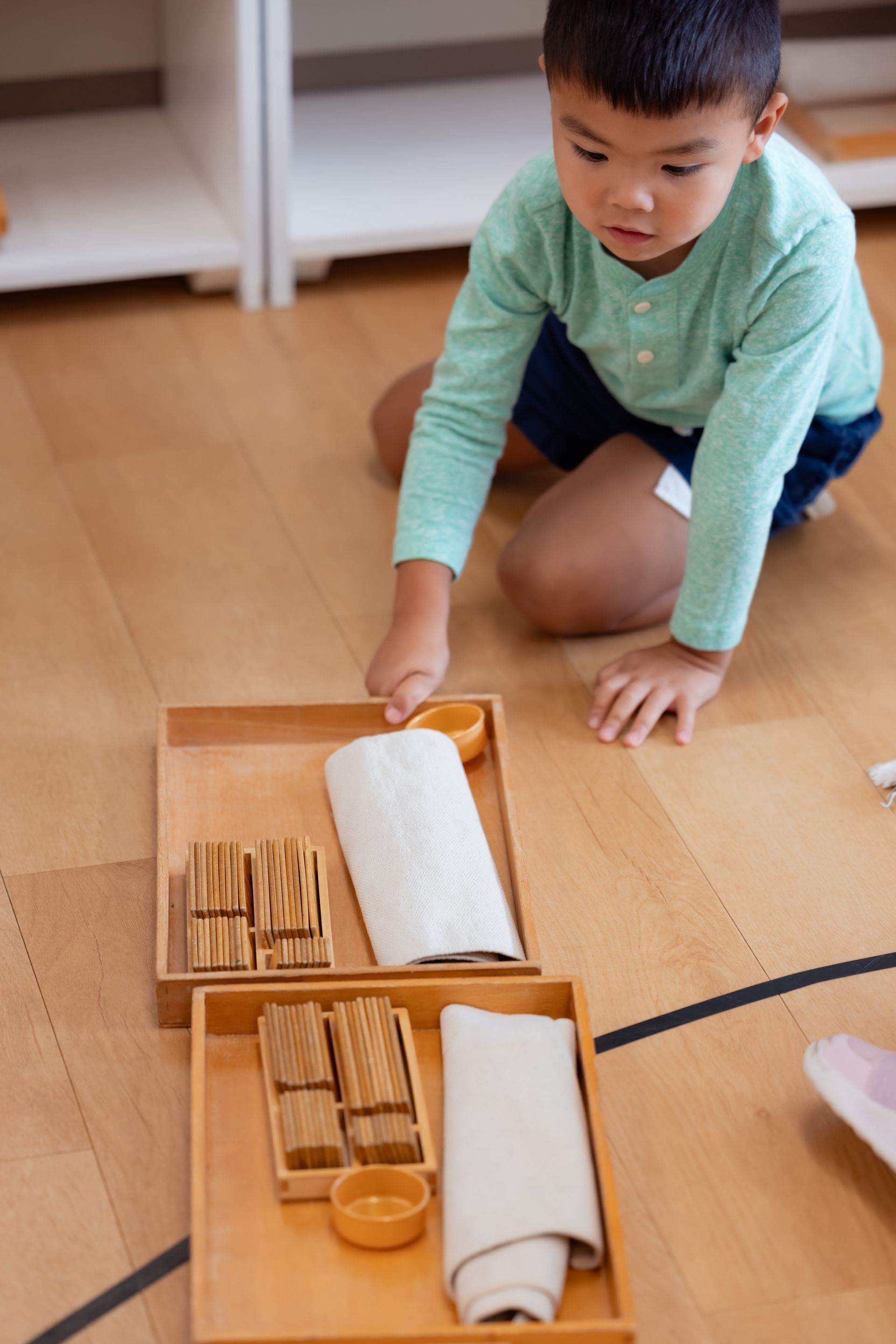
During the primary years (ages 3–6), children build a foundation through concrete, sensorial experiences. By age six, their developmental superpower shifts to imagination. Elementary-aged children use this superpower to explore concepts beyond their immediate physical environment—traveling through time, visualizing microscopic cells, or understanding cosmic distances.
At TMSOE, our elementary curriculum speaks directly to this imaginative capacity, fueling inquiry, creative problem-solving, and critical thinking across all subjects.
Occupations: Hands-On Work for Middle Schoolers
Middle school students frequently ask, "What am I going to use this for?" They have a deep, healthy drive to apply their knowledge to real life and make an authentic impact.
Occupations are focused, purposeful, adult-level activities that integrate body and mind. They give adolescents hands-on experience in contributing to their school and local community.
Examples of occupations include:
- Planning and managing a micro-business (e.g., student-run enterprise or farm stand).
- Designing and maintaining a community garden space.
- Managing school-wide recycling, composting, or restorative community initiatives.
Through occupations, TMSOE adolescents develop practical life skills, teamwork, responsibility, and an early understanding of economic and social systems.
Plan of Study and Work
"...the aim should be to widen education instead of restricting it."
— Dr. Maria Montessori, From Childhood to Adolescence
At the adolescent level, our educational approach is guided by a holistic Plan of Study and Work. This framework balances academic rigor with personal growth, social responsibility, and practical application.
The framework focuses on three essential areas:
- Moral & Personal Growth: Treating growing young people with dignity, supporting their emotional well-being, and honoring their identity through restorative practices.
- Integrated Academics: Engaging syllabus and project-based methods that prepare students for high school, college, and lifelong learning.
- Practical Operations: Real-world involvement in micro-economies, community partnerships, and hands-on production.
Psycho-Discipline: Honoring the Learner's Mind
To understand psycho-discipline, it helps to look at its roots: psycho relates to the mind, soul, or psychology, and discipline refers to a branch of knowledge.
Psycho-discipline means presenting academic concepts in alignment with the psychological and natural developmental stages of the learner. Instead of forcing rigid, traditional memorization, Montessori educators meet students where they are developmentally.
When learning honors a child's natural psychological tendencies, they stay intrinsically motivated and take genuine ownership of their education. At TMSOE, this means nurturing the whole child—head, hands, and heart—so that learning serves human development, agency, and self-construction.
Experience Public Montessori at TMSOE
Montessori education is designed to aid human development, inspire lifelong curiosity, and prepare children to be thoughtful, compassionate leaders in their communities.
As a tuition-free public charter school in West Englewood, we are dedicated to bringing this powerful educational model to every child.
Interested in seeing how our Elementary and Middle School programs bring these concepts to life?
Schedule a tour to learn more!